17 de marzo, 2019
El arte y la práctica de la poesía de la muerte
The Art and Practice of Death Poetry
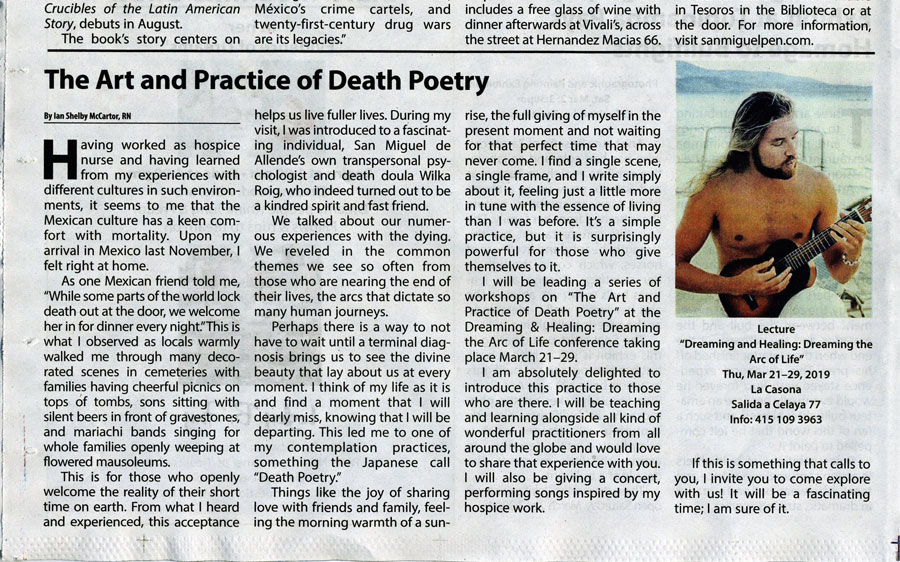
Como ya sabes, estoy, y he estado desde hace bastante tiempo, dedicada y ocupada en organizar la conferencia Dreaming & Healing, así que voy a compartir contigo los artículos que mis queridas y queridos colegas han estado escribiendo en apoyo de nuestro esfuerzo colectivo.
Nuestro primer escritor invitado, mi querido amigo y colega Ian McCartor, comparte su experiencia en México durante la semana del Día de Muertos —uno de esos momentos especiales del año en que se dice que el velo es más delgado, en que los espíritus conspiran a nuestro favor, en que la guía de nuestros sueños puede sentirse tan palpable— y su práctica de la poesía de la muerte, que enseñará en la conferencia en círculos vivenciales.
Aquí está: el artículo de Ian, El arte y la práctica de la poesía de la muerte, publicado en Atención San Miguel, 1 de marzo de 2019, Vol. XLV, n.º 18
Habiendo trabajado como enfermero de cuidados paliativos y aprendido de mis experiencias con distintas culturas en esos entornos, me parece que la cultura mexicana tiene una notable comodidad con la mortalidad. Cuando llegué a México el pasado noviembre, me sentí como en casa.
Como me dijo un amigo mexicano: «mientras algunas partes del mundo le cierran la puerta a la muerte, nosotros la invitamos a cenar todas las noches». Eso fue lo que observé mientras la gente del lugar me llevaba con calidez a recorrer muchos escenarios decorados en los cementerios, con familias haciendo alegres picnics sobre las tumbas, hijos sentados con cervezas en silencio frente a las lápidas, y mariachis cantando para familias enteras que lloraban abiertamente ante mausoleos cubiertos de flores.
Esto es para quienes reciben abiertamente la realidad de su breve tiempo en la tierra. Por lo que escuché y viví, esta aceptación nos ayuda a vivir vidas más plenas. Esta perspectiva consciente nos lleva a ocuparnos de las bellezas sagradas que hay dentro de lo cotidiano, poniendo atención en los momentos presentes que tantas veces dejamos pasar sin gratitud.
Durante mi visita me presentaron a una persona fascinante, la psicóloga transpersonal y doula de muerte de San Miguel, Wilka Roig, que resultó ser un alma afín y una amiga inmediata.
Hablamos de nuestras numerosas experiencias con personas que están muriendo. Nos maravillamos con los temas comunes que vemos tan a menudo en quienes se acercan al final de su vida, los arcos que dictan tantos recorridos humanos.
Tal vez haya una manera de no tener que esperar a que un diagnóstico terminal nos lleve a ver la belleza divina que nos rodea en cada momento. Pienso en mi vida tal como es y encuentro un momento que extrañaré profundamente, sabiendo que me iré. Esto me llevó a una de mis prácticas de contemplación, algo que los japoneses llaman poesía de la muerte.
Cosas como la alegría de compartir el amor con amistades y familia, sentir la calidez de un amanecer, entregarme por completo en el momento presente y no esperar ese momento perfecto que quizá nunca llegue. Encuentro una sola escena, un solo cuadro, y escribo sobre ella con sencillez, sintiéndome un poco más en sintonía con la esencia de vivir de lo que estaba antes. Es una práctica sencilla, pero sorprendentemente poderosa para quienes se entregan a ella.
Voy a guiar una serie de talleres sobre El arte y la práctica de la poesía de la muerte en la conferencia Dreaming & Healing: Dreaming the Arc of Life, en San Miguel, que se realizará del 21 al 29 de marzo.
Estoy absolutamente encantado de presentar esta práctica a quienes estén allí. Voy a enseñar y a aprender junto a todo tipo de practicantes maravillosos de todo el mundo, y me encantaría compartir esa experiencia contigo. También daré un concierto, con canciones inspiradas en mi trabajo en cuidados paliativos.
Si esto es algo que te llama, ¡te invito a venir a explorar con nosotros! Será un momento fascinante, estoy seguro.
ÚNETE a la conversación dinámica, didáctica y experimental a través de la cual soñamos nuevas posibilidades para nuestro presente y para el futuro de nuestras generaciones.
Si no puedes acompañarnos en persona, considera apoyar la causa, que va más allá de esta conferencia con la intención de transformar la cultura global de la pérdida y la muerte.
|
Del 21 al 29 de marzo de 2019
As you now know, I am, and have been for quite some time, engaged and occupied with organizing the Dreaming & Healing conference, so I will share with you the articles my dear colleagues have been writing in support of our collective endeavor.
Our first guest writer, dear friend and colleague Ian McCartor, shares his experience in Mexico during the week around Day of the Dead—one of those special times of the year when the veil is said to be thinnest, when the spirits conspire in our favor, when the guidance of our dreams can be so palpable—and his practice of Death Poetry, which he will be teaching at the conference in experiential circles.
Here it is: Ian’s article, The Art and Practice of Death Poetry, published in Atención San Miguel, Mar 1, 2019, Vol XLV, No. 18
Having
worked as hospice nurse and learned from my experiences with different
cultures in such environments, it seems to me that the Mexican culture has a
keen comfort with mortality. Upon my arrival to Mexico last November, I felt
right at home.
As one Mexican friend told me, “while some parts of the world lock death out at
the door, we welcome her in for dinner every night.” This is
what I observed as locals warmly walked me through
many decorated scenes in cemeteries with families having cheerful
picnics on tops of tombs, sons sitting with silent beers in front of
gravestones, and mariachi bands singing for whole families openly
weeping at flowered mausoleums.
This is for those who openly welcome the reality of their short time on earth.
From what I heard and experienced, this acceptance helps us live fuller
lives. This mindful perspective concerns us with the sacred beauties
within the ordinary, focusing on the present moments that are so often brushed
away without gratitude.
During my visit, I was introduced to a fascinating individual, San Miguel’s own
transpersonal psychologist and death doula Wilka Roig, who indeed turned out to
be a kindred spirit and fast friend.
We talked about our numerous experiences with the dying. We reveled in the
common themes we see so often from those who are nearing the end of their
lives, the arcs that dictate so many human journeys.
Perhaps there is a way to not have to wait until a terminal diagnosis brings us
to see the divine beauty that lay about us at every moment. I think of my
life as it is, and find a moment that I will dearly miss, knowing that I will
be departing. This led me to one of
my contemplation practices, something the Japanese call Death Poetry.
Things like the joy of sharing love with friends and family, feeling the
morning warmth of a sunrise, the full giving of myself in the present moment
and not waiting for that perfect time that may never come. I find a single scene, a single frame,
and I write simply about it, feeling just a little more in tune with the
essence of living than I was before. It’s a simple practice, but surprisingly
powerful for those who give themselves to it.
I will be leading a series of workshops on The
Art and Practice of Death Poetry at the Dreaming &
Healing: Dreaming the Arc of Life conference in San Miguel taking place March
21-29.
I am absolutely delighted to introduce this practice
to those that are there. I will be teaching and learning alongside all kind of
wonderful practitioners from all around the globe, and would love to share that
experience with you. I will also be giving a concert, performing songs
inspired by my hospice work.
If this is something that calls to you, I invite you to come explore with us! It
will be a fascinating time, I am sure of it.
JOIN the dynamic, didactic and experimental conversation through which we dream new possibilities for our present and the future of our generations.
If you are unable to join in person, consider supporting the cause, which goes beyond this conference with the intention to shift the global loss and death culture.
|
March 21-29, 2019
Otros artículos
Sigue recorriendo